
Weakness from gadgets. Why are we now helpless and distracted?
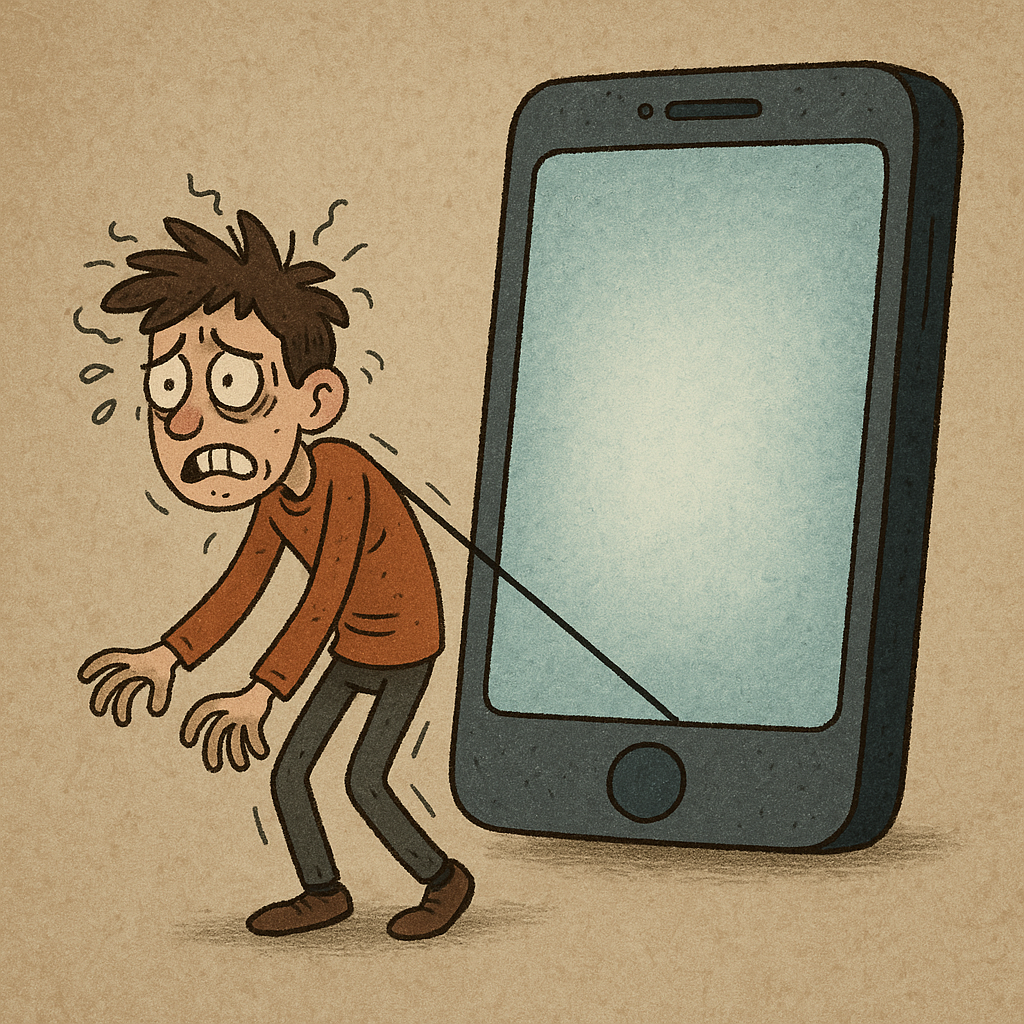
Smartphone is an extension of the hand.
We live in an era where smartphones have become an extension of our hands and, in fact, our means of identification, and access to information is constant and instantaneous. However, we pay a high price for this comfort: loss of focus, dependence on notifications, and a sense of helplessness without gadgets.
Why do gadgets make us weaker?
1. Constant dopamine “shower”
Every like, message, or push notification stimulates the release of dopamine, the neurotransmitter of reward expectation.
Asa result, the brain starts looking for quick, short-term gratification instead of long-term and meaningful achievements. It’s like eating only sweets – fast energy, but no nutrition. You can see what you’re eating, but you’re still hungry.
2. Defocusing and “clip thinking”
Switching between messages, chats, social media, and work depletes the prefrontal cortex, the centre of concentration and decision-making.
As aresult, we lose the ability to concentrate and think deeply for long periods of time, and we begin to perceive information superficially, memory deteriorates, and relationships become superficial.
3. The effect of “learned helplessness”
Dependence on technology creates the illusion that we are powerless without a gadget (although it is already a question of whether it is still an illusion or already true):
- we don’t remember our friends’ phone numbers because “everything is in the smartphone”;
- we can’t find our way without Google Maps;
- we feel anxious if the phone is dead or left at home.
This programs us to be passive: we give up some of our autonomy and independence, we believe what is online, our critical thinking decreases, and a sense of constant anxiety is born.
4. Information overload
We receive from 50 to 1000 notifications a day, and each one is a small stressor.
Constantly responding to the flow of information activates the limbic system (the amygdala, the area of fear and anxiety) and increases cortisol levels.
Theresult: chronic fatigue, apathy, emotional breakdowns, emotional burnout, burnout at work, burnout in relationships.
Read more here (link to the previous article)
5. Changing the communication model
Live communication is being replaced by emojis, short messages, and likes. We are gradually losing the skills of deep dialogues and the ability to build long-term relationships.
It‘ sa paradox: we are constantly “connected” but feel lonelier.
Why do we feel helpless?
- Instant response habit: we expect things to happen quickly and effortlessly.
- Delegating memory and decisions to gadgets: GPS, calendar, notes – everything is done by the smartphone, and we just follow through.
- Narrowing attention horizons: when the brain is used to 15-second videos, long texts or complex tasks cause discomfort that exceeds our capabilities.
- FOMO (fear of missing out): we are afraid of switching off because we are “missing something important”, and thus we tie ourselves to the screen.
- A negative picture of the world has been formed that does not bode well for us: almost all news and information posts have “shocking” clickbait headlines. And the news is generally negative. After all, almost no one will read about something good. And gradually, we get the impression that everything is bad around us and we will soon end as a humanity.
What to do about it?
1. Train your information exposition
- Turn off unnecessary push notifications.
- Set aside 2-3 “windows” of your time a day to check messengers, rather than responding constantly.
- Watch 1, maximum 2 news channels, but always those you trust. All the same, the main news will be on all the channels, so you won’t miss anything.
2. Set digital boundaries
- 30 minutes after waking up and 1 hour before bedtime – no phone.
- One day a week – “digital detox”.
- A room without gadgets – for example, a toilet.
3. Regain control of your memory and skills
- Learn important phone numbers by heart.
- Sometimes use paper maps, write down notes by hand.
- Keep a paper diary.
4. Engage in “slow activity”
- Reading a paper book.
- Sports without trackers.
- Go for long walks without music or podcasts.
5. Practice live communication
- Make an appointment without using your phone.
- Learn to listen without simultaneous scrolling.
Conclusion
Gadgets are a tool, not an enemy. The problem is not technology, but our addiction and lost self-regulation skills.
True power is the ability to use technology, notbecome a slave to it.
When we regain control of our attention, we stop being scattered and feel inner strength even without gadgets.
Related posts
Nothing found
New

Subscribe
stay up to date with all new publications
Recent Posts

How to maintain clarity of thought in the age of information overload
AI was used to collect information, create comparative tables, and "comb the text". Today, humanity lives in an era when the powers that be no longer hide the fact that information Читати далі

Conscious mechanisms of influence on humans: consciousness control technologies
Use of AI: for combing the text, searching for studies and examples, clarifying the essence of methods. "It is impossible to solve a problem at the same level of thinking at which Читати далі
Ways to influence human consciousness through gadgets
Used by AI: to collect information, create comparison tables, and "comb the text". A new era of digital dependence In the twenty-first century, gadgets have become not just a communication tool, but a Читати далі